Esko lança novo sistema LED para exposição de chapas
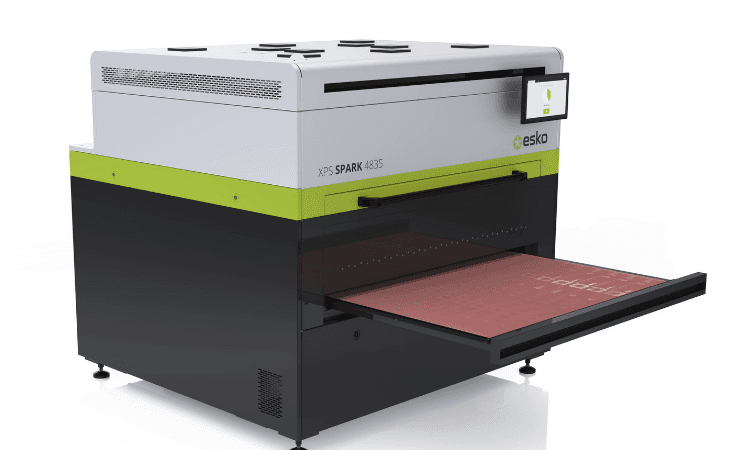
O XPS Spark 4835, um sistema digital de exposição de chapas flexográficas por LED de “nova geração”, projetado para substituir os tradicionais equipamentos de exposição com lâmpadas UV, já está disponível comercialmente em todo o mundo pela Esko, após a conclusão de um programa bem-sucedido de testes com clientes na Alemanha, Estados Unidos e Reino Unido.
A empresa afirma que o sistema oferece qualidade de chapa consistente e repetível, tempos de exposição mais curtos e uma redução significativa no impacto ambiental, tudo isso em um formato compacto e de fácil instalação ("plug-and-play"), desenvolvido especialmente para convertedores de rótulos, bureaus de pré-impressão (tradeshops) e fabricantes de embalagens flexíveis.
No coração do XPS Spark 4835 está uma tecnologia patenteada de óptica caleidoscópica, que, segundo a Esko, garante uma distribuição homogênea da luz UVA sobre toda a superfície da chapa. De acordo com a empresa, isso elimina pontos de concentração de luz ("hotspots") e artefatos de exposição irregulares ou ondulados, comuns em sistemas baseados em lâmpadas UV convencionais e em sistemas LED sem tecnologia caleidoscópica. O resultado é uma reticulação uniforme do polímero e uma reprodução de impressão altamente consistente.
Eddy Fadel, gerente geral da divisão Flexo da Esko, contextualiza o lançamento como uma forma de ajudar operadores de flexografia a modernizar sua produção de chapas com soluções simples, sustentáveis, eficientes e de alta qualidade.
"Milhares de operações flexográficas em todo o mundo ainda dependem de sistemas de exposição UV antigos, que estão se tornando cada vez mais difíceis e caros de manter. O XPS Spark oferece uma alternativa preparada para o futuro, entregando qualidade premium de exposição enquanto reduz o consumo de energia e a geração de resíduos."
Outro fator importante para o lançamento do XPS Spark é a crescente dificuldade na obtenção de lâmpadas UV de reposição, as pressões regulatórias sobre lâmpadas UVA contendo mercúrio — especialmente sob a Diretiva Europeia 2011/65/EU — e os problemas conhecidos dos tubos UV, cujo desempenho se degrada com o uso, resultando em exposições inconsistentes e imprevisíveis, além de variações na qualidade de impressão.
Segundo Fadel, o XPS Spark 4835 foi desenvolvido especificamente para atender essa necessidade do mercado.
"Posicionado entre os sistemas convencionais de exposição por lâmpadas e a plataforma Esko XPS Crystal, o XPS Spark é uma solução dedicada de exposição por LED projetada para tornar a exposição de chapas flexográficas de alta qualidade mais acessível."
Utilizando tecnologia de exposição UVA LED de superfície total, o sistema oferece tempos de exposição comparáveis ou até mais rápidos do que os sistemas convencionais, sem necessidade de aquecimento prévio das lâmpadas.
Além disso, a empresa afirma que o equipamento reduz o impacto ambiental ao eliminar o mercúrio do processo de fabricação de chapas e diminuir o consumo de energia em até 80% quando comparado aos sistemas tradicionais de exposição UV.
Uma tecnologia patenteada de resfriamento por ar elimina a necessidade de chillers de alto consumo energético, enquanto uma gaveta isolada para chapas — também patenteada — minimiza a perda de calor. Há ainda uma gaveta opcional integrada de acabamento UVA/UVC, que combina retroexposição, exposição principal e acabamento em uma única unidade.
O sistema possui parâmetros de exposição abertos, compatíveis com chapas de todos os fabricantes do mercado, permitindo que os usuários ajustem e otimizem as configurações de acordo com seus fluxos de trabalho e requisitos de produção.
A Esko também revelou que está desenvolvendo o Spark Screens, uma tecnologia de retícula dedicada à plataforma XPS Spark, projetada para melhorar ainda mais a qualidade de impressão com tintas UV, aumentar a vivacidade das cores e reduzir o tempo de acerto de máquina.
Entre os clientes que participaram dos testes está Meike Bamberg, responsável por pré-impressão (CTP), flexografia e offset na empresa Nagels Druck, que afirmou:
"O sistema proporciona uma exposição precisa e uniforme, em forte contraste com a exposição ondulada produzida pelas unidades de exposição com lâmpadas UV. Os benefícios de uma exposição uniforme ficam imediatamente evidentes durante a impressão."
Já Dawn White, gerente de pré-impressão da MackayMitchell Envelope Company, nos Estados Unidos, comentou:
"O novo equipamento melhorou tanto a eficiência quanto a ergonomia dos operadores. A exposição por LED elimina o tempo de aquecimento das lâmpadas, resultando em economia mensurável de tempo e em um processo de fabricação de chapas mais eficiente. O design ergonômico da gaveta reduz o esforço físico ao minimizar a necessidade de se curvar e elimina a abertura e fechamento da tampa principal de exposição. Combinado com controles intuitivos e fáceis de usar, o sistema é extremamente amigável ao operador e favorece uma operação diária consistente e eficiente."